
Battery & BMS
Identify the cabinet arrangement, monitoring boundaries and information available from the battery management system. Agree how status, alarms and operating limits will be passed to other equipment.

A battery installation is defined by how it will charge, discharge and interact with the rest of the site. Required power and usable energy are different design inputs: one describes the rate of delivery, while the other describes how long that delivery can continue. Both should be evaluated against the intended operating profile.
Equipment coordination connects the battery cabinets, battery management system, power conversion equipment and supervisory controls. Space planning, environmental conditions and access for replacement or inspection need to be considered alongside the electrical arrangement.
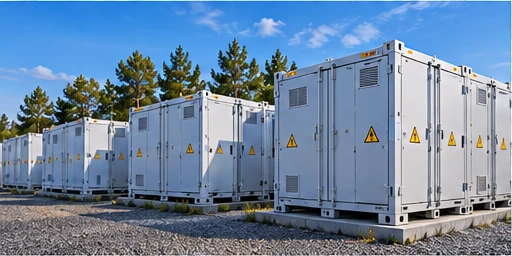
Identify the cabinet arrangement, monitoring boundaries and information available from the battery management system. Agree how status, alarms and operating limits will be passed to other equipment.
Review foundations, delivery access, cable routes and environmental conditions. Thermal management, emergency arrangements and separation requirements must follow the project design and applicable local requirements.
Define the responsibilities of the BMS, power conversion system and energy management interface. Clear ownership of operating commands and limits helps prevent conflicting instructions.
| Design input | What to coordinate |
|---|---|
| Duty profile | Charging windows, discharge duration and cycling pattern |
| System boundary | Battery, conversion equipment and site connections |
| Environment | Temperature range, enclosure location and service access |
| Acceptance | Alarm checks, communication tests and operating records |
Describe the intended energy use and site constraints.
Coordinate battery, conversion and control interfaces.
Review installation and commissioning responsibilities.
Record settings, test results and maintenance requirements.