
Process
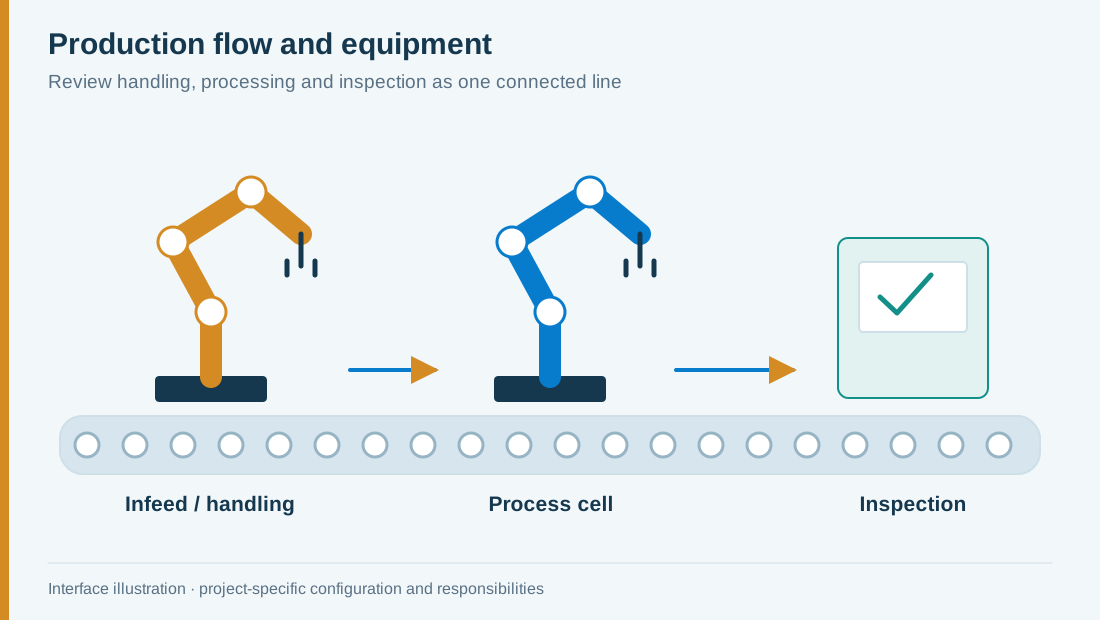
Production flow and equipment
Map how material and information move through the production area. Check the dependencies between machines, transfer points and operator activities.
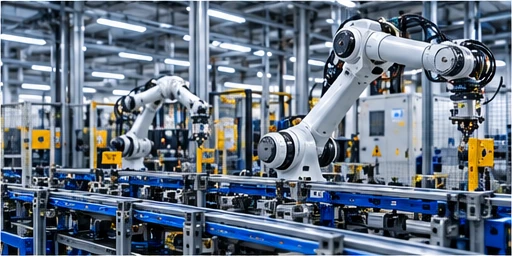
Coordinate the line, not just the machine.
Automation projects bring together equipment from multiple disciplines and suppliers. A practical delivery plan joins mechanical installation, electrical connections, communication and process testing. This makes interface ownership visible before integrated commissioning begins.
The final configuration depends on the site requirements, the equipment available and the agreed scope of work. Interface planning connects those decisions with installation, testing and the information needed for operation.
Select a layer to see how it connects to the wider installation.
Map how material and information move through the production area. Check the dependencies between machines, transfer points and operator activities.
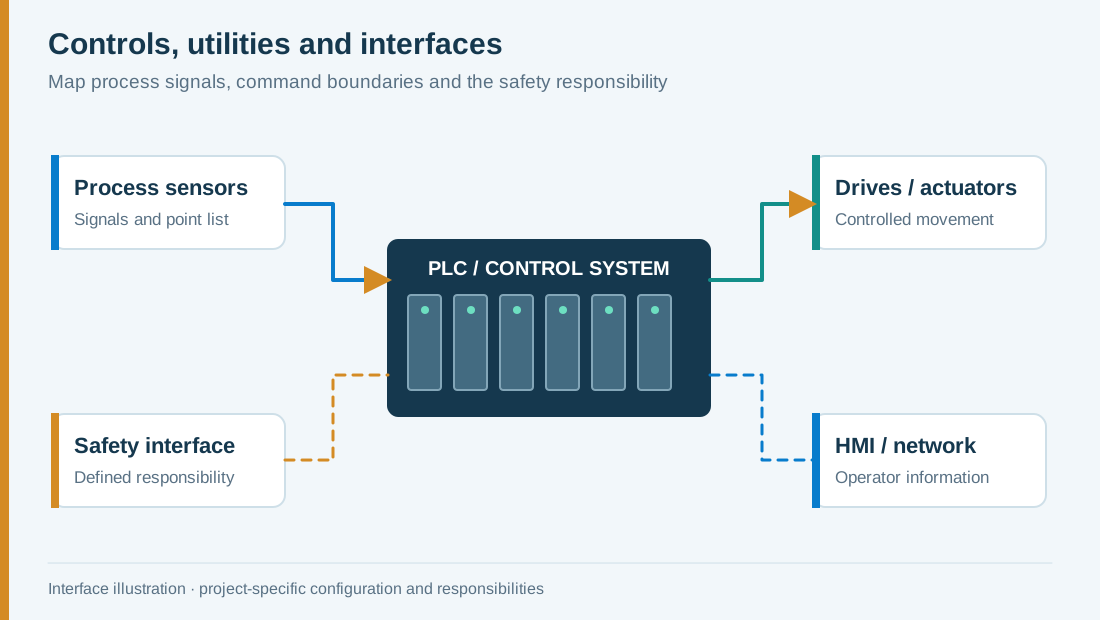
Connect equipment installation with power, communication and control signals. Keep a responsibility matrix for upstream and downstream interfaces.
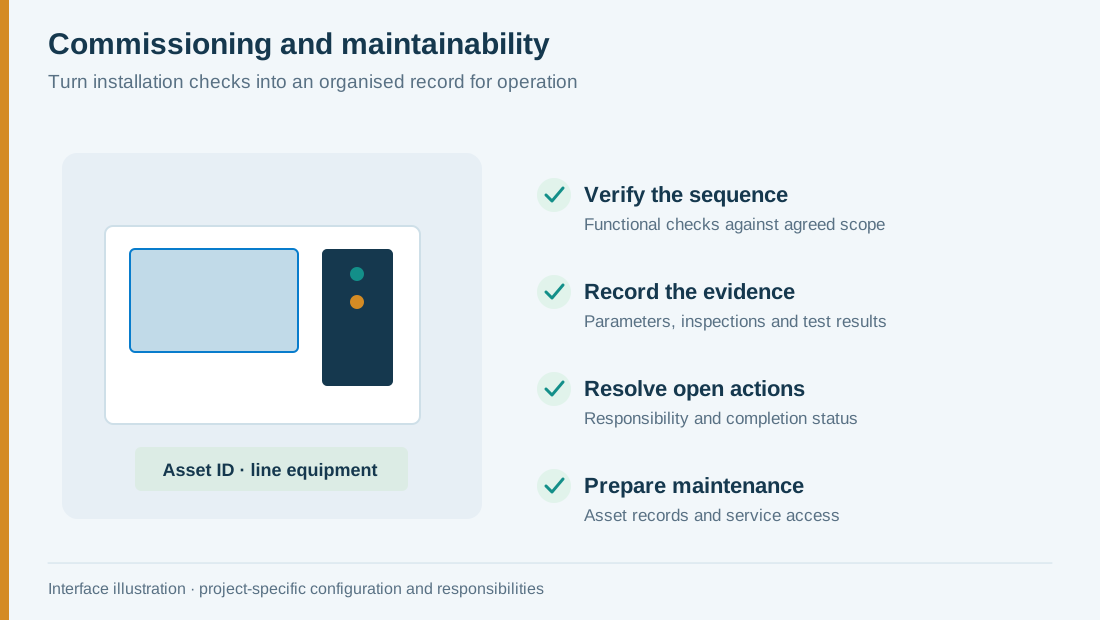
Plan integrated tests around the agreed operating sequence. Prepare fault records, settings and maintenance information for the handover to production.
Confirm equipment positioning, transfer conditions, utility needs and the installation sequence.
Verify the agreed signals and operating responses between machines before full line trials.
Provide records, backups and recovery information so that the operating team can investigate interruptions.
An interface register should identify each connection, the information needed to complete it and the party responsible for verification. Keeping this record current gives installation and commissioning teams a common reference when equipment or site conditions change.
At acceptance, drawings and equipment schedules should reflect the delivered arrangement. Test records, settings and agreed operating instructions then provide a useful starting point for maintenance and future modifications.